TMO
Time-resolved Atomic, Molecular and Optical science
In the picture
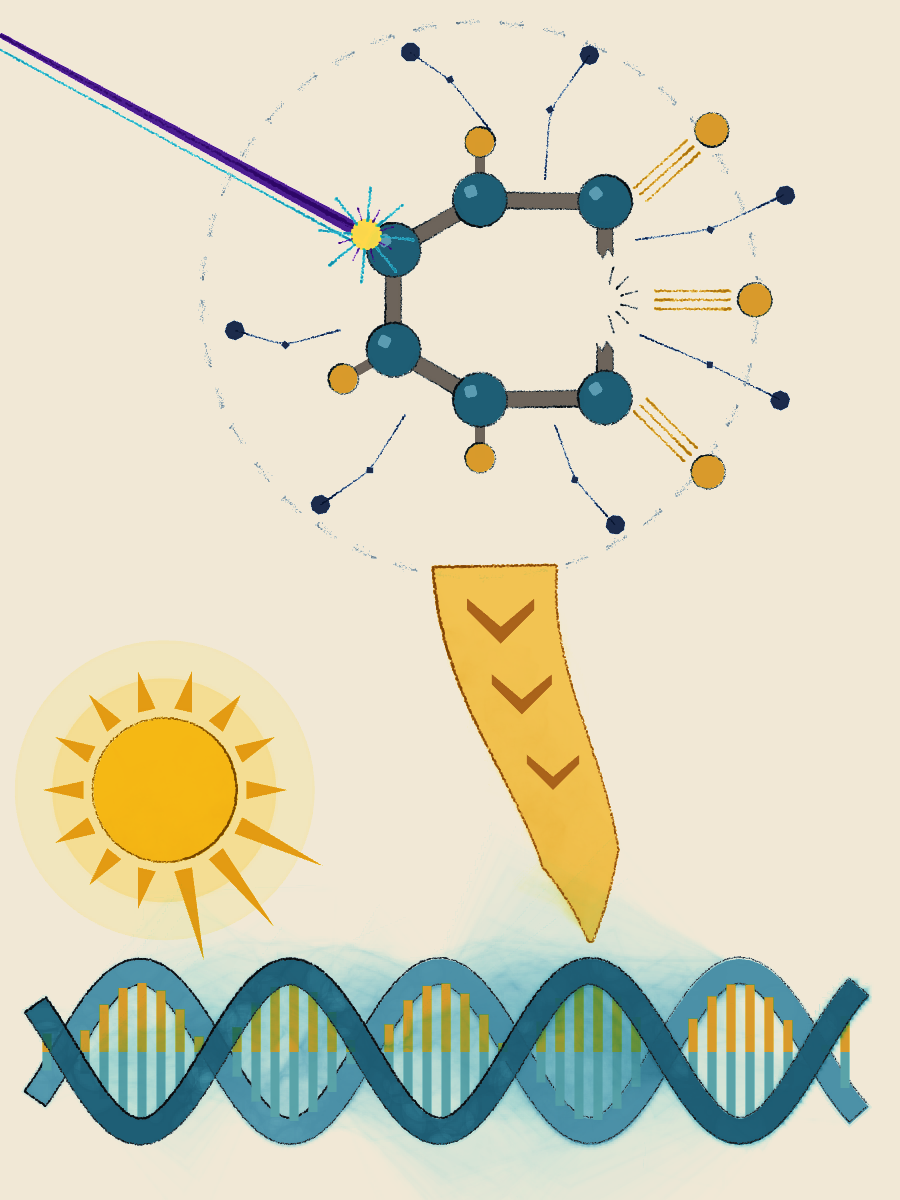
An X-ray pulse hits a ring-shaped molecule. The ring breaks open, and its electrons and ions fly outward like dandelion seeds, each one caught inside a faint sphere. A gold ribbon leads down to the sun shining on a DNA double helix that is still whole.
The science
TMO uses soft X-ray flashes to film single molecules floating in a gas at the moment light hits them: charge moving, bonds breaking, rings opening. It measures all the fragments of each molecule together, one molecule at a time.
In everyday life
A lot of life's chemistry starts with sunlight. Thymine, one of the letters of DNA, gets rid of the energy of absorbed ultraviolet light within femtoseconds. That is one reason sunlight doesn't tear apart the DNA in our skin.
TXI
Tender X-ray Instrument
In the picture
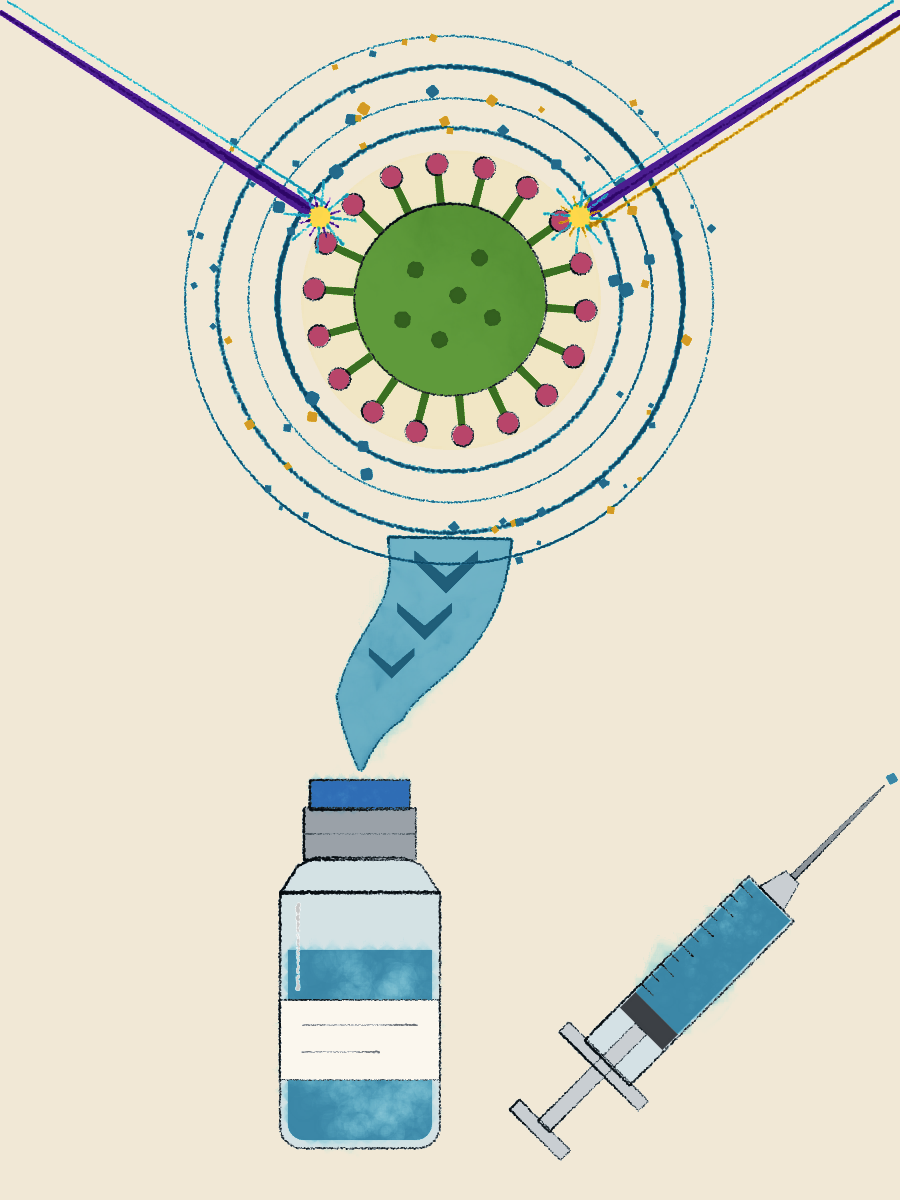
Two X-ray beams, one of them edged in amber, cross at a single virus particle. Rings of scattered light spread out around it like ripples. A blue ribbon flows down into a vaccine vial, with a syringe beside it.
The science
TXI can combine X-rays from two independent X-ray lasers, using one to excite a sample and the other to probe it. It also takes pictures of single tiny particles such as viruses and cells, one flash at a time, using “tender” X-rays (between soft and hard X-rays in energy).
In everyday life
Studying viruses and cells one by one, in their natural state, shows how each one differs from the next. This helps us understand infection and design vaccines and medicines.
XPP
X-ray Pump-Probe
In the picture
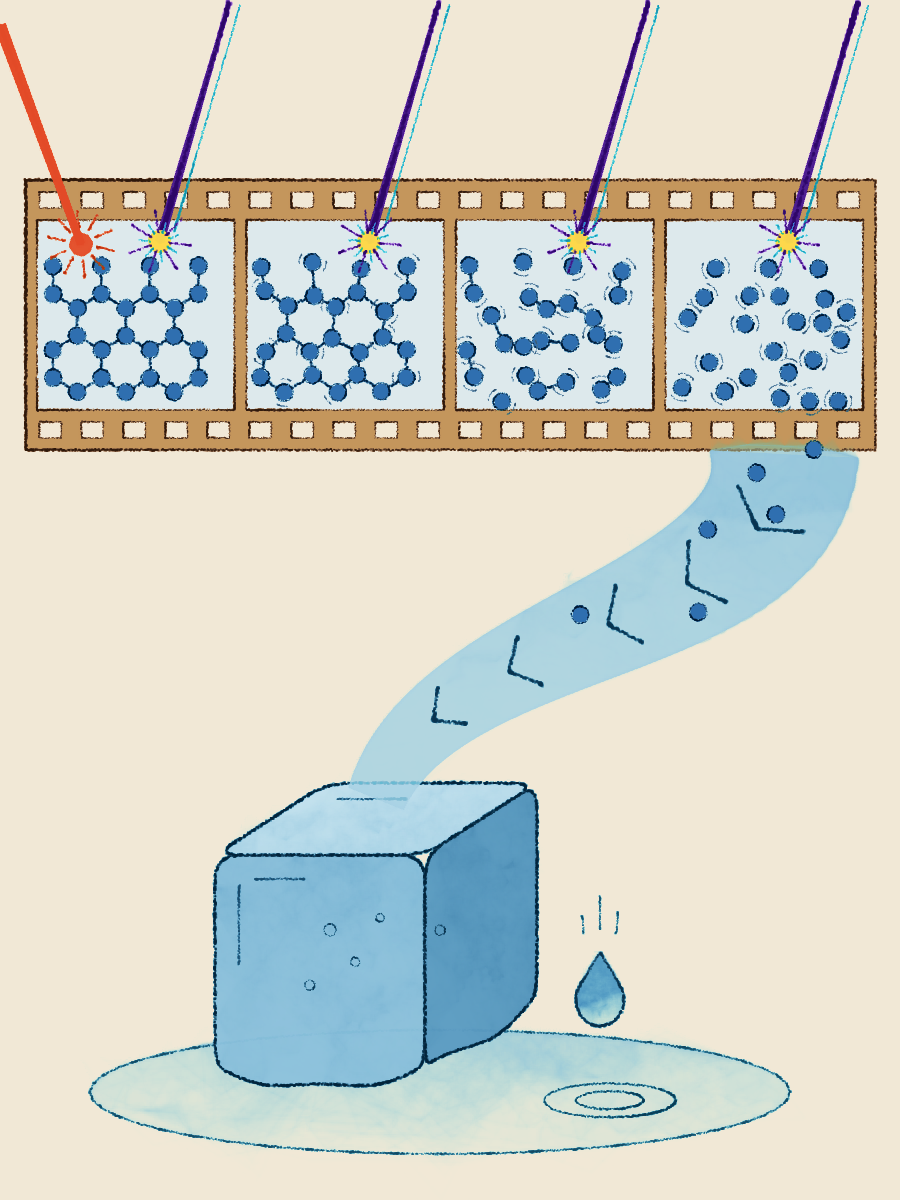
A red laser flash hits the first frame of a film strip. An X-ray pulse takes a snapshot in each frame, while a neat honeycomb of atoms, like ice, loosens into a disordered liquid. The loose atoms spill down onto a melting ice cube and a falling drop of water.
The science
A short optical laser flash starts a change in a solid, liquid or gas. Hard X-ray pulses then take snapshots femtoseconds to picoseconds later. Put together, the snapshots make a movie of atoms moving.
In everyday life
Ice melting, pollutants breaking down and catalysts making the fertilizer that grows our food: how ordinary matter changes affects our climate, our water and our food supply.
chemRIXS
Chemistry with Resonant Inelastic X-ray Scattering
In the picture
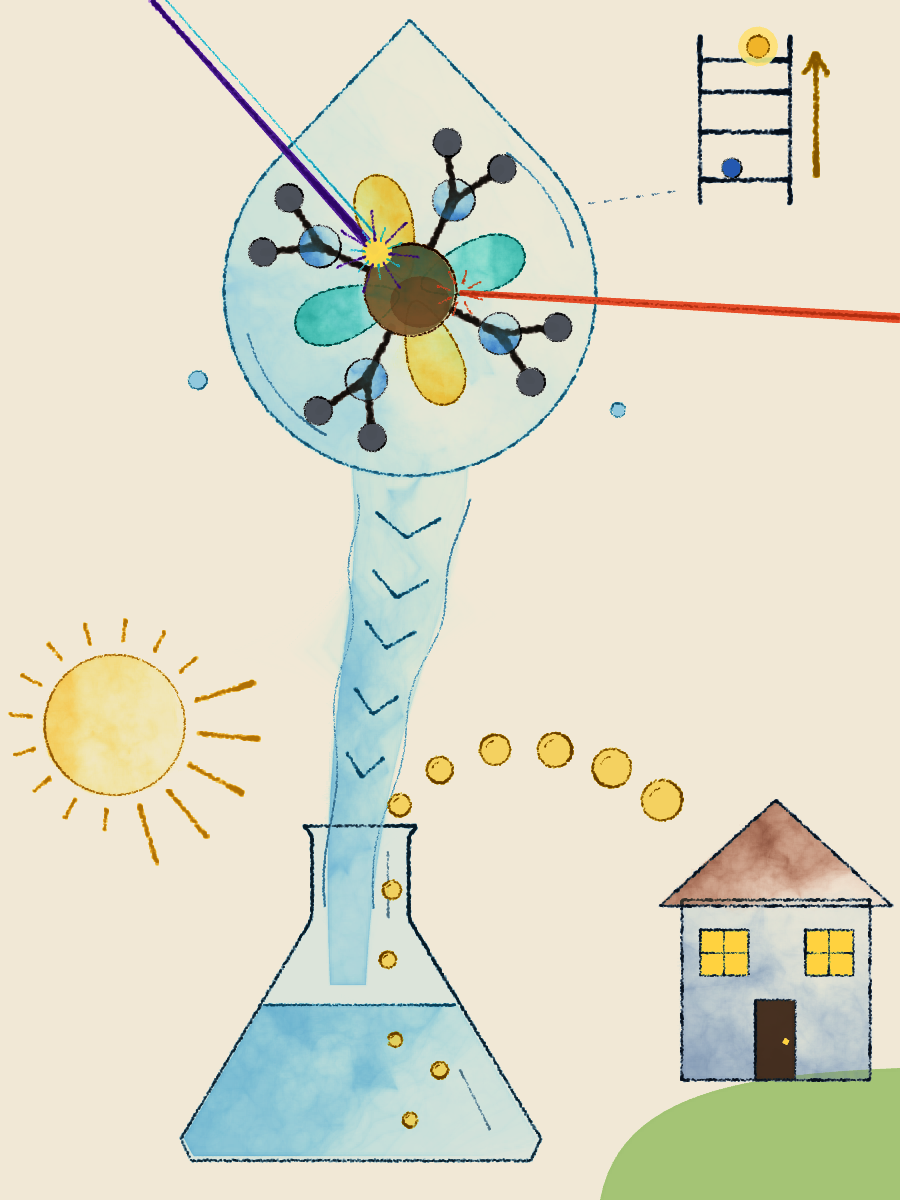
Inside a drop of liquid, an X-ray pulse and a red laser meet at a molecule with a metal atom at its centre. Coloured electron orbitals glow around the metal, and a small ladder of energy levels shows an electron moving up. The liquid pours into a flask in the sunlight, and bubbles of fuel drift over to a house with warmly lit windows.
The science
chemRIXS tunes soft X-rays to one chemical element and measures the energy levels of electrons in molecules dissolved in a liquid. It does this while a laser drives a light-powered reaction, in the liquid where the chemistry really happens.
In everyday life
Catalysts made from common, cheap metals could use sunlight to make clean fuels and chemicals. That means cleaner energy for homes and transport.
qRIXS
Momentum-resolved RIXS for quantum materials
In the picture
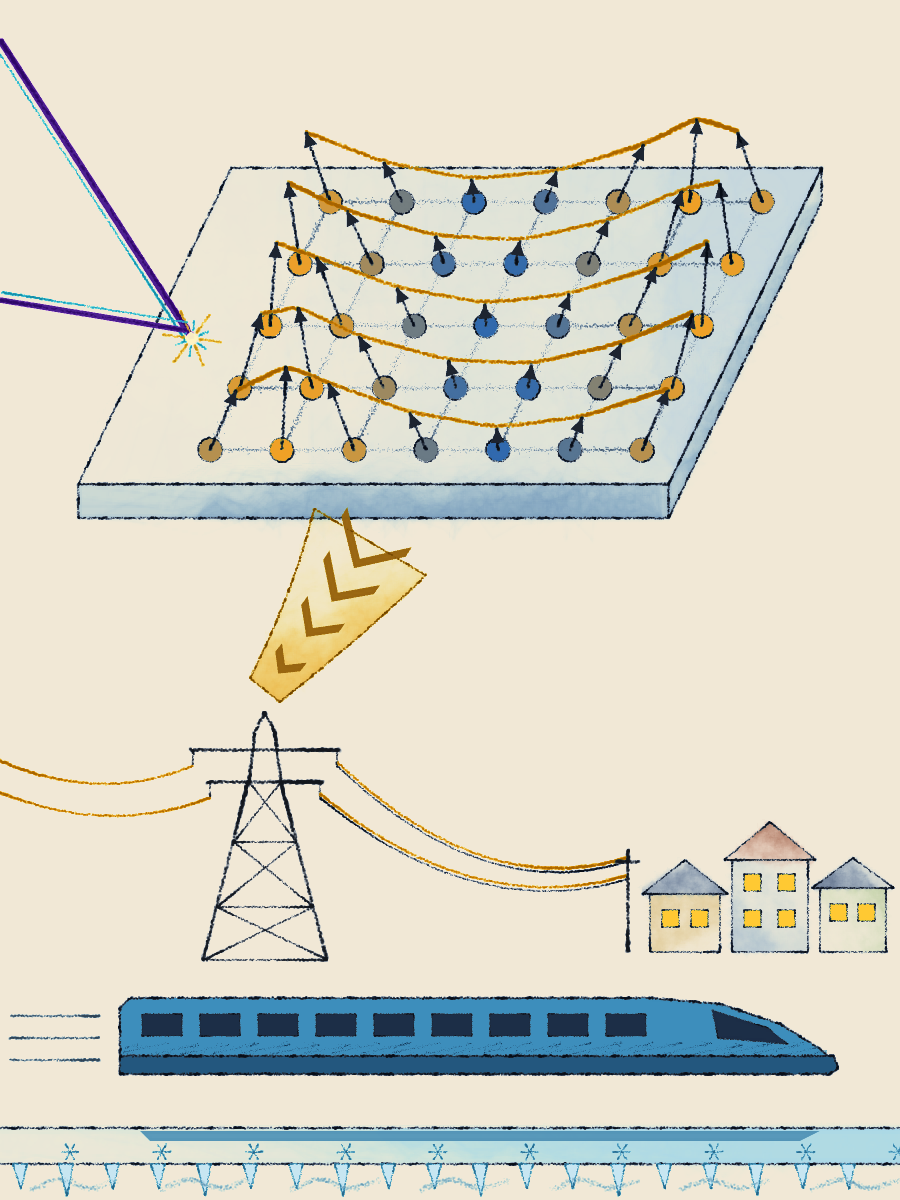
An X-ray pulse scatters off a tilted crystal of atoms, each with a tiny spin arrow. A gold wave rolls through the arrows, like a crowd doing “the wave” in a stadium. Below, power lines feed a lit town, and a train floats above a frosty, super-cold track.
The science
qRIXS uses soft X-rays to measure the collective ripples inside quantum materials: waves of electron spin, charge and atomic vibration that move through the whole crystal together. It measures their energy and direction, and can watch them change when the material is pushed into new states.
In everyday life
These ripples are part of what makes a material a superconductor, which carries electricity with no loss. Better superconductors could mean power lines that waste no energy, levitating trains, cheaper MRI scanners and better batteries.
XCS
X-ray Correlation Spectroscopy
In the picture
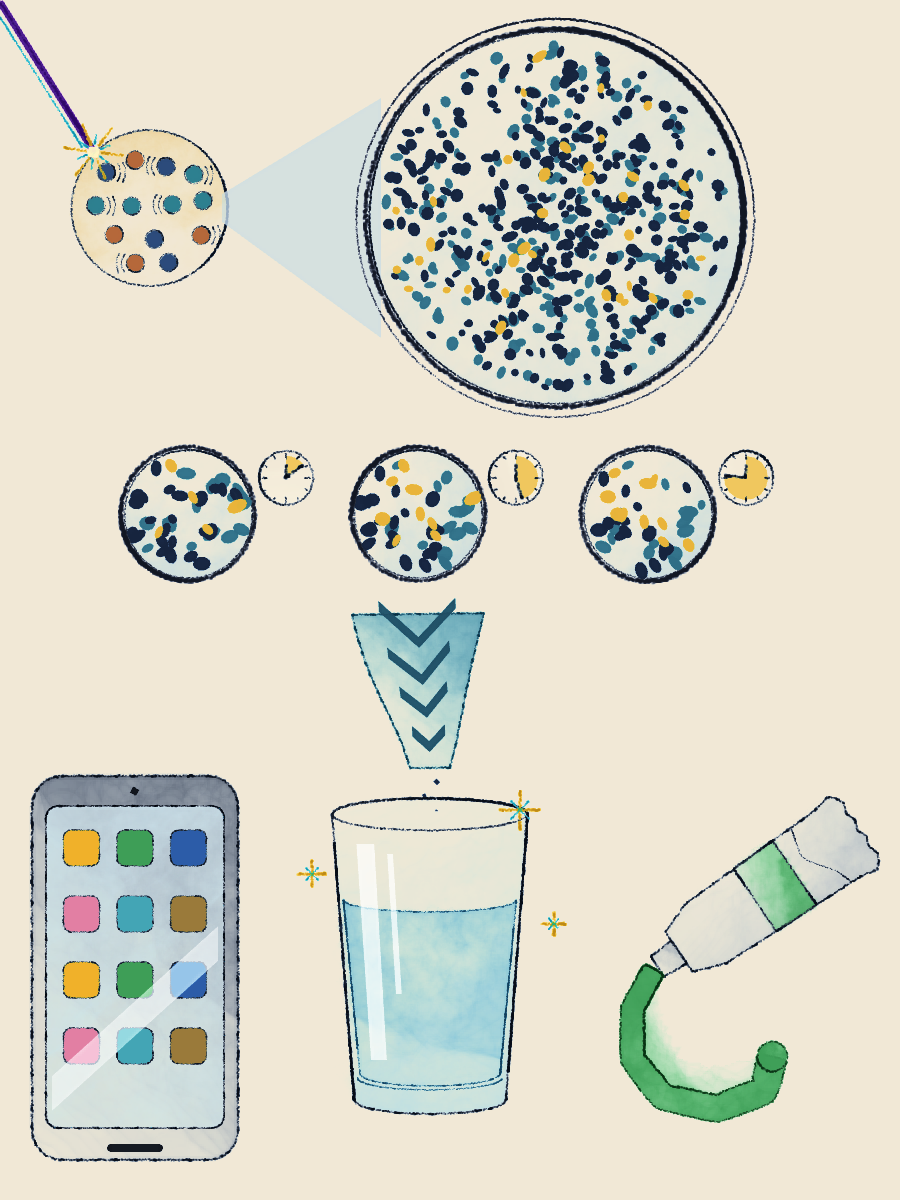
An X-ray pulse enters a small circle of moving particles, shown magnified as a big round window of grainy speckles. Three smaller windows, each beside a clock, show the speckles shifting as time passes. A ribbon leads down to a phone screen, a drinking glass and a tube of squeezed gel.
The science
When X-ray laser light scatters off a disordered material, it makes a grainy “speckle” pattern, a fingerprint of where every particle sits. XCS watches the speckles change over time, from femtoseconds to thousands of seconds, to learn how the particles in glasses, gels, liquids and plastics move and age.
In everyday life
Window glass, phone screens, plastics, paints and gels are all disordered materials. How their particles move decides how they flow, set, crack and age.
MFX
Macromolecular Femtosecond Crystallography
In the picture
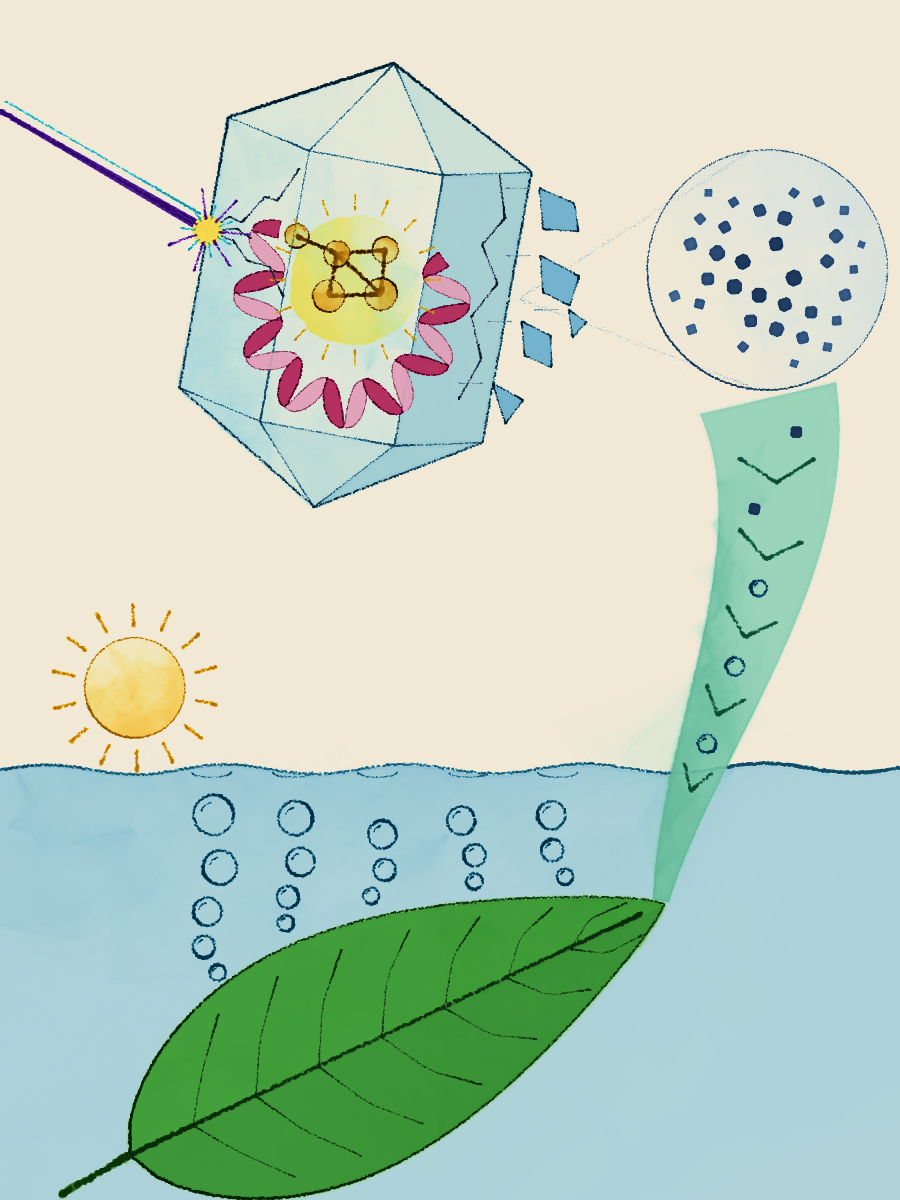
An X-ray flash hits a gem-like protein crystal. Inside it, a coiled protein holds a glowing cluster of metal atoms. The crystal is starting to crack, but its pattern of diffraction spots is already flying out ahead of the pieces. A green ribbon leads down to a leaf under water, giving off streams of oxygen bubbles.
The science
MFX hits protein crystals at room temperature with very short, very bright X-ray flashes. It records the scattered X-rays before the crystal is destroyed (“diffraction before destruction”), and measures X-ray spectra at the same time. This shows how fragile, metal-containing proteins work.
In everyday life
Enzymes with metal atoms at their centre do some of life's hardest chemistry. One example is the enzyme in green plants that splits water and releases the oxygen we breathe.
CXI
Coherent X-ray Imaging
In the picture
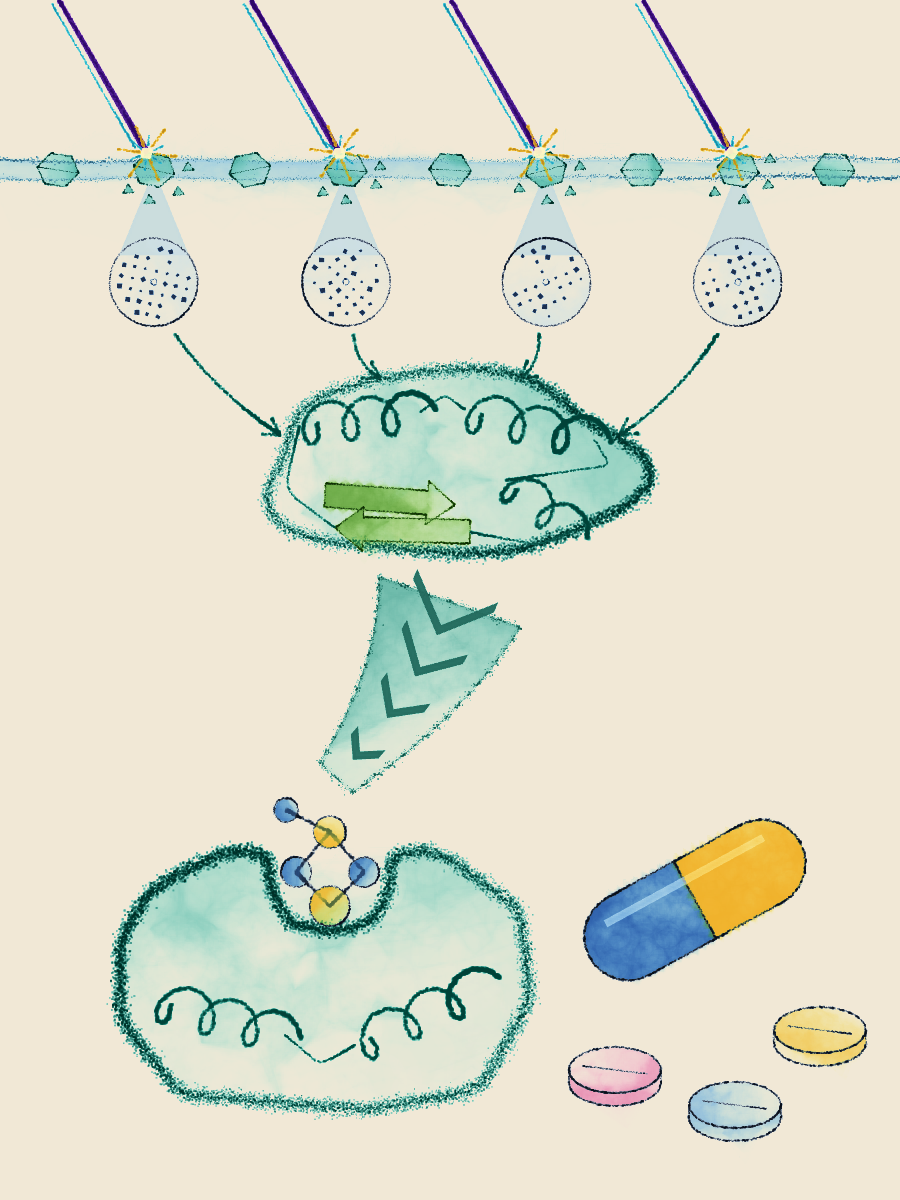
A thin jet carries a line of tiny crystals. X-ray pulses hit them one after another, and each crystal gives a small pattern of spots. The patterns come together into one protein shape. Below, a small drug molecule fits into a pocket of the protein like a key in a lock, next to a capsule and some pills.
The science
CXI uses “diffraction before destruction” with hard X-rays, in vacuum, to find the structure of proteins from crystals far too small for ordinary X-ray sources. Snapshots from thousands of tiny crystals are combined into one 3D structure.
In everyday life
Many of the proteins that medicines act on will only form tiny crystals. Knowing their shapes lets chemists design drugs that fit them like a key in a lock.
MEC
Matter in Extreme Conditions
In the picture
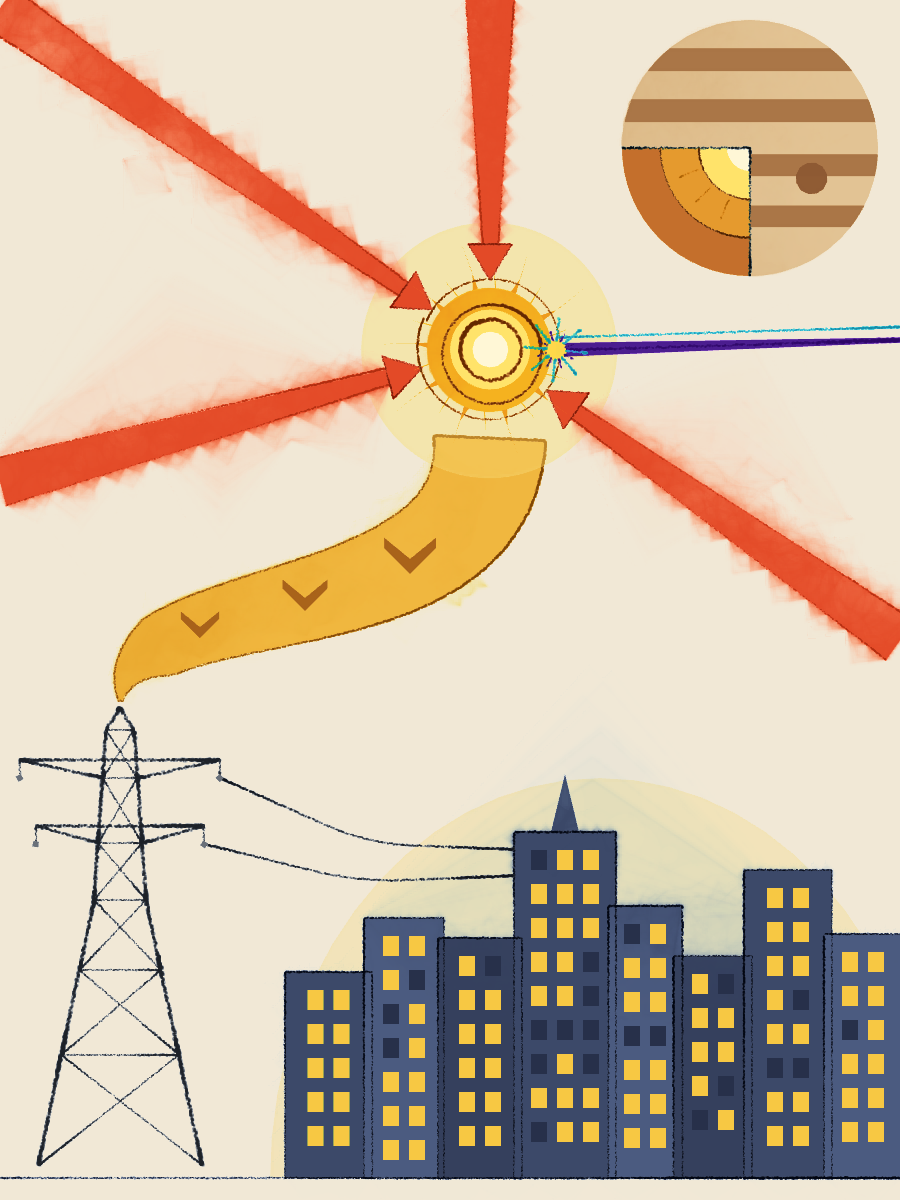
Red laser beams come in from several sides and crush a tiny bead until it blazes like a small sun, while an X-ray pulse takes its picture. In the corner, a cut-away giant planet shows its dense, glowing core. A gold ribbon becomes a power line feeding a city at dusk.
The science
MEC combines the LCLS X-ray beam with high-power lasers that heat and shock matter to pressures and temperatures like those inside giant planets, stars or a fusion fuel pellet. X-ray flashes watch how that matter behaves in the femtoseconds to picoseconds before it changes or flies apart.
In everyday life
Fusion, the energy source of the sun and stars, could one day give everyone clean, plentiful electricity if we can recreate it on Earth. The same experiments tell us what planets are made of.
MeV-UED
Megaelectronvolt Ultrafast Electron Diffraction
In the picture
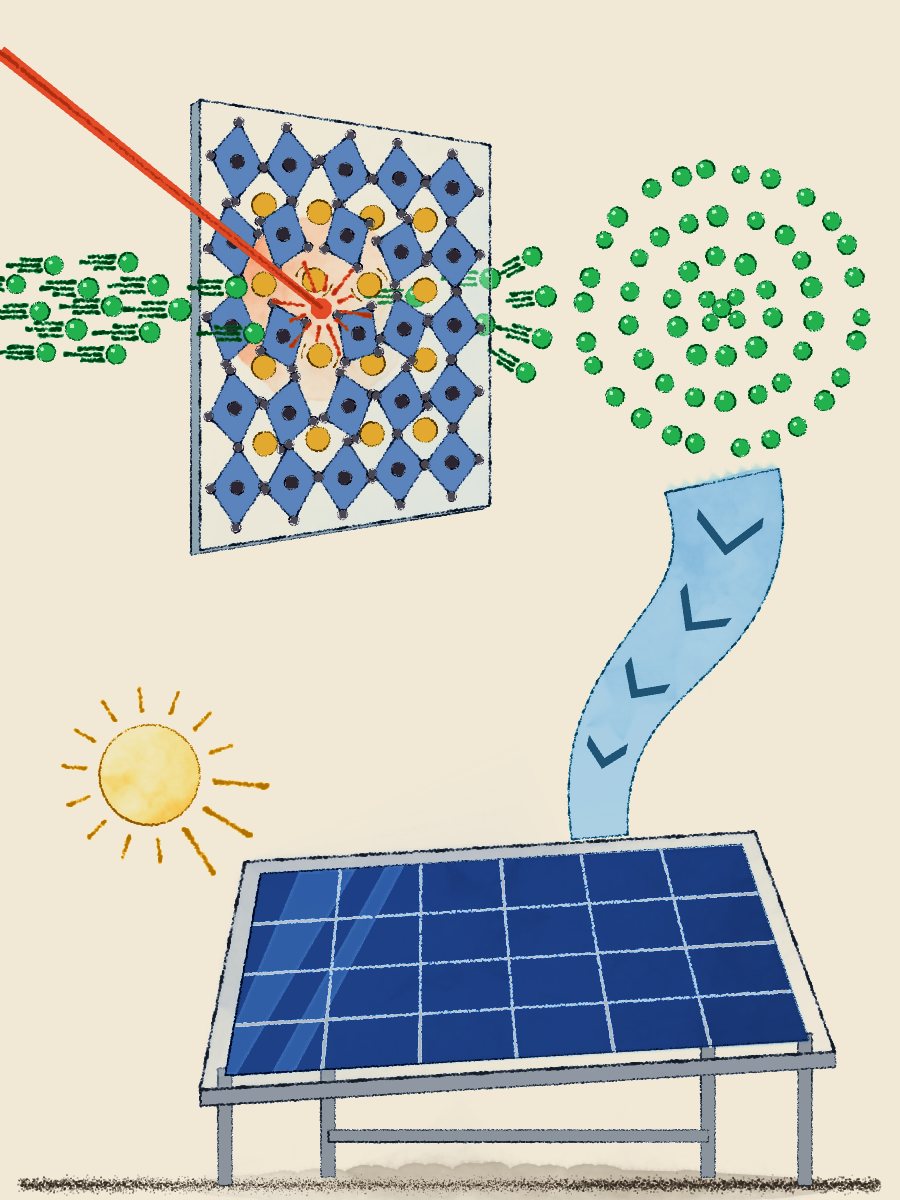
A red laser flash hits a thin pane of crystal, a checkerboard of blue diamonds with gold atoms between them. Near the flash, the diamonds tilt out of line. A swarm of green beads (electrons, not light) flies straight through the pane and spreads out behind it into rings of green dots. A blue ribbon leads down to a solar panel turned toward the sun.
The science
MeV-UED's probe is not the X-ray laser but a short pulse of electrons, made by its own electron source (a “photocathode rf gun”) with millions of electron-volts of energy (that is what “MeV” means). A laser flash starts a change in a very thin sample, and an electron pulse passes through it a moment later. The electrons scatter off the atoms into a diffraction pattern of rings and spots. Put together, the patterns make a movie of the atoms moving.
In everyday life
Perovskites are crystals used to make a new kind of solar cell. MeV-UED has made atomic-level movies of how light bends and twists these crystals. Knowing how they respond to light can help make solar panels that turn more sunlight into electricity and last longer.